
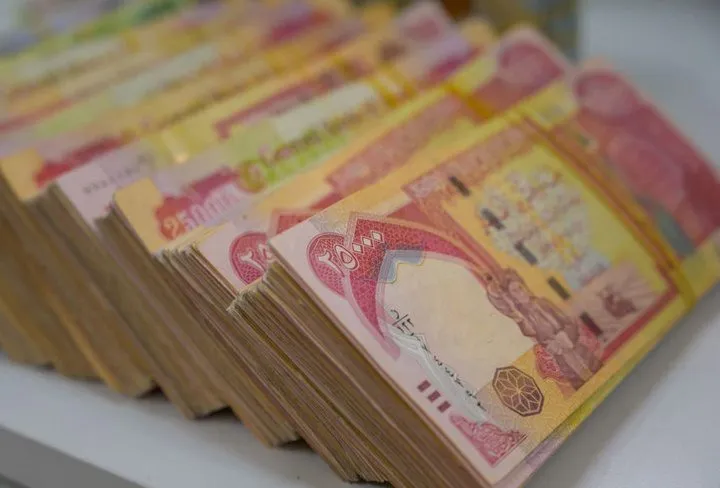
Iraq's revenues covered only 57 percent of government expenditures
According to Kurdistan Press, based on reports from the Accounting Department of the Iraqi Ministry of Finance, a comparison of realized revenues and actual current and capital budget expenditures in the first seven months of 2025 and 2026 indicates an increase in pressure on the country's public finances.
Iraq's oil revenues decreased by 53 percent, from 65 trillion dinars in 2025 to 30.4 trillion dinars in 2026, and the share of oil in total revenues decreased from 90 percent to 78 percent.
In contrast, non-oil revenues grew by 23.5 percent to 8.7 trillion dinars. However, the increase in non-oil revenues was only about 1.7 trillion dinars of the gap created by the 34.6 trillion dinars decrease in oil revenues.
Debt service costs also increased by 109 percent, from 3 trillion dinars to 6.2 trillion dinars, becoming the third largest component of government spending, reflecting the increasing reliance on borrowing to finance the budget deficit.
On the other hand, government employee salaries and wages amounted to 35.9 trillion dinars, equivalent to 92 percent of total revenues and, together with social protection costs, accounting for about 79 percent of current spending. Meanwhile, real investment spending decreased by about 37 percent, and the education and transportation and communications sectors faced a 72 percent and 55 percent reduction in capital spending, respectively.According to the report, the growth of non-oil revenues, despite its importance, is not sufficient in the current circumstances to compensate for the decline in oil revenues, and Iraq's financial situation still requires simultaneous structural reforms in the public revenue and expenditure sectors.



User comments