
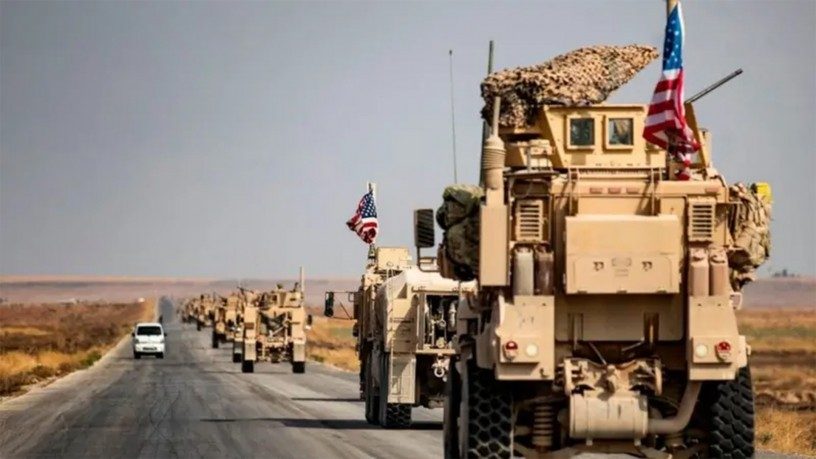
Ozgur Paksoy: US withdrawal has put the Kurdistan Region in a historic test
According to KurdPress, Ozgur Paksoy, a Kurdish journalist close to the PKK, described the complete withdrawal of US forces from Iraq and the Kurdistan Region as the end of an important period in regional politics, a period whose roots go back to the Persian Gulf War in 1991 and the establishment of a no-fly zone in northern Iraq.“The no-fly zone and the international umbrella of support after the Persian Gulf War were one of the important factors in the formation and stabilization of the political position of the Kurdistan Region. Over the past three decades, the region has expanded its political and security structure under the support and supervision of international forces; but the change in the balance of power in the Middle East, the agreement between Washington and Baghdad on the withdrawal of troops, and the change in the US military strategy have now created new conditions.
Baghdad’s optimism and Erbil’s concern
The Iraqi central government and Shiite political movements have long called for the end of the presence of international coalition forces. Baghdad believes that the Iraqi armed forces are now capable of ensuring the country’s security and that relations with the US can also continue in the form of bilateral economic and security cooperation.From the Iraqi government's perspective, September 30 marks the end of the presence of foreign military forces and a symbol of the restoration of the country's national sovereignty; however, Kurdistan Regional Government officials have a different assessment of the consequences of this development.
In statements that were echoed in international media, Masrour Barzani, the Prime Minister of the Kurdistan Region, emphasized that the US withdrawal is taking place at a very tense time. Although he later denied some of the statements attributed to him, he warned about the weakness of the region's defense structure and the consequences of leaving it alone without an appropriate defense system.
Barzani also said that the refusal of some armed groups to lay down their weapons could upset the federal balance in Iraq and directly threaten the achievements of Kurdish autonomy.
Massoud Barzani, the head of the Kurdistan Democratic Party (KDP), has also issued a similar warning, recalling past experience.He pointed to the withdrawal of American forces from Iraq in 2011 and the massive ISIS attacks in 2014, saying that re-creating such a security vacuum could expose the Kurdistan Region and the region to serious risks.
Concerns about drone attacks and the return of ISIS
One of the most important concerns of the Kurdistan Region is the withdrawal of support equipment, air defense systems, and early warning facilities of American forces. The Kurdistan Region currently does not have a comprehensive and independent air defense system and early warning radar network, and this situation could make it more vulnerable to missile and drone attacks.
The activities of some other armed groups are also another concern for Erbil. Regional officials believe that these groups can increase the pressure on the federal structure of the Kurdistan Region economically, politically, and militarily.Along with these threats, there is also the possibility of ISIS cells reactivating. In recent days, a number of officials and observers in the Kurdistan Region have warned that the withdrawal of American forces may create a new space for the reorganization of ISIS cells.
The need to integrate the Peshmerga forces
As the time for the withdrawal of American forces approaches, the issue of integrating the Peshmerga forces affiliated with the Kurdistan Democratic Party and the Patriotic Union of Kurdistan (YNK) into the structure of the Peshmerga Ministry has become more important.
The integration of the Peshmerga forces is considered one of the most important programs for reforming the security structure of the Kurdistan Region, and how it is implemented can play a fundamental role in determining the region's defense capability in the period after the US withdrawal.In an interview with the media, Basa Hozat, the co-chair of the KCK Executive Council, assessed the development as positive; but said that at the same time, the differences related to the formation of the new Kurdistan Regional Government must also be resolved.
Basa Hozat: The Region Needs Democratic Unity
Emphasizing the need to form an inclusive government in the Kurdistan Region, Basa Hozat said that the future political structure should not rely solely on the rule of parties, but that representatives of all segments of society and organized institutions should also participate in it.
He considered the formation of a “democratic state” and strengthening the democratic unity of the Kurds essential to confront the threats ahead, adding that such a structure could also help democratize Iraq.
Hozat said: “A federal and democratic Kurdistan Region, a democratic unity state, and the transformation of the Peshmerga forces into a unified military force are of great importance.These developments can make a great contribution to the democratization of the Kurdistan Region and Iraq.”
He also stated that strengthening the democratic struggle of the Kurds in Turkey, the Kurdistan Region, Syria and Iran can also play an effective role in the democratization process of the Middle East.
With the withdrawal of American forces, how to create an independent defense structure, integrate the Peshmerga forces, resolve political differences and form an inclusive government have become the most important challenges facing the Kurdistan Region; challenges that can determine the political and security future of this region.”

User comments