
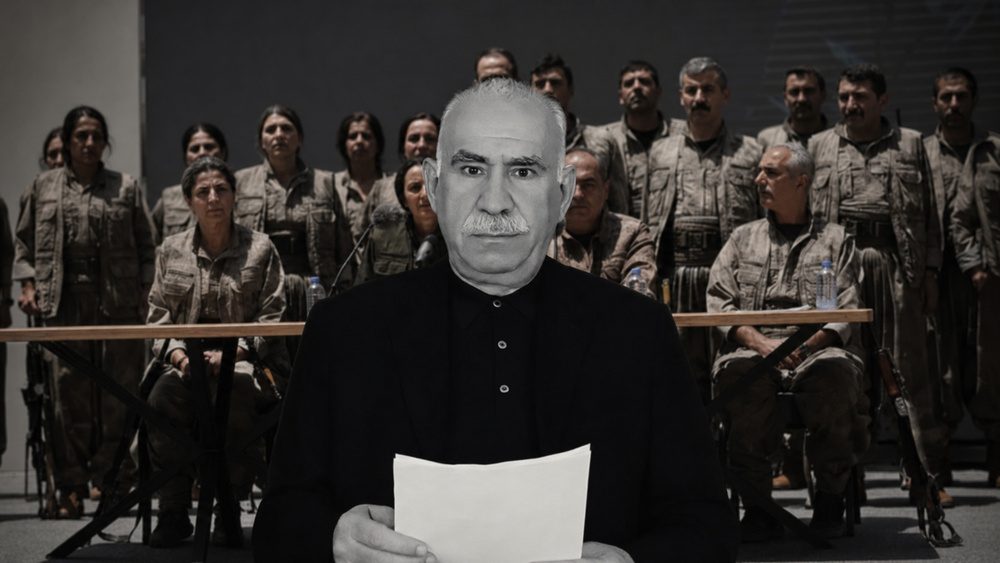
Öcalan: Those who have fought armed struggle should be able to return to normal life
According to Kurdistan Press, PKK leader Abdullah Öcalan sent a message to the two-day "Peace and Democratic Integration" conference, which is being held in London at the initiative of the Center for Kurdish Affairs.
The conference began on September 29 and ends today, September 30.A number of Kurdish politicians, parliamentarians, academics, journalists, civil society activists and international experts are present and will discuss the Kurdish issue, peace processes and global experiences in conflict resolution.
In his message, Öcalan considered democratic integration as the opposite of assimilation and said: “Assimilation destroys identities and spreads hostility; integration creates unity and builds peace.”
He also emphasized: “If the Kurdish issue is not resolved, it will not be possible to build a more peaceful, secure and livable future for everyone in the Middle East.”
Full text of the message of Abdullah Öcalan, PKK leader:
“The call for peace and a democratic society that I announced on February 27, 2025, opened the doors of a new era. The PKK movement, democratic politics, the parties present in the Turkish Grand National Assembly and Turkish society in general supported this call.Now is the time to step through this open door and move forward. The issues you will discuss in this conference are precisely those of this beginning. You will discuss how to transform this political beginning into a lasting peace, drawing on international experience and Kurdish perspectives. These discussions are the practical implementation of this call.
Peace does not come with an agreement or a law alone. Laying down arms is a beginning. What will last is building society. The transition from armed struggle to a lasting peace requires a longer-term political, legal, institutional and social transformation. The fundamental goal of this transformation is to build a democratic society. In my view, revolution is not a bargaining chip for power; revolution is transformation through construction.“Freedom” achieved through violence will soon become the antithesis of the values for which it was fought. Without a dignified peace, democracy and freedom cannot endure; neither democracy nor social peace can take root under the shadow of arms.
The millennial relationship between Kurds and Turks, Kurds and Persians, and Kurds and Arabs is not one of mutual hostility; rather, it is a dialectic that, despite its ups and downs, is based on mutual support. Today, these relationships can be rebuilt through democratic integration, without assimilation or separation. Separatist solutions are not compatible with the reality of this geography, because nations, cultures, and beliefs live side by side in this geography. The rights of brotherhood are also based on historical and sociological foundations.The relationship between the Kurds and the Turks, Persians, Arabs and other nations of this land cannot be resolved by drawing borders. Millions of Kurds live in the metropolitan areas of the countries of the region. For example, if it is said that “the Kurds should go to the north and the Turks to the south”, this would be neither compatible with historical commonality nor with social relations.
Integration is the opposite of assimilation. Assimilation dissolves and spreads hostility; integration creates unity and establishes peace. This integration allows the democratic society to maintain its existence and to participate voluntarily in the democratic republic within the framework of collective rights.
The PKK, which I founded, emerged as a struggle for existence in accordance with the conditions of its time. The PKK proved the existence of the Kurds and broke the chain of denial. In the world of 2025, the Kurdish nation is a historical reality and can no longer be denied.For this reason, the historical mission of our movement has come to an end. This movement, like any other revolutionary structure, must transition to a new form after the end of its mission. Dissolution is not the end or surrender; it is the transition to a new stage of history. If we insist on the old form, the greatest harm will be done to the Kurdish nation.
From now on, weapons should not be praised; society should be built. Democratic politics has replaced the strategy of national liberation war. Our most powerful weapon is speech, rights and an organized society.
Democratic politics is possible only on a normal basis. On this basis, not only weapons are laid down, but violence and the threat of war are also mutually eliminated.
A Turkey in which Kurds participate with democratic awareness will become a democratic republic in the true sense.The goal in Turkey and the Middle East is not disintegration; the goal is to build a real democracy together.
The way out of the crises in the Middle East is not to create new nation-states that break down borders; but to restore common ground between nations, that is, in negotiations based on integration and a democratic shared structure.
A political beginning cannot become a lasting peace with the decision of one side alone. Integration requires common steps, agreement, and recognition of mutual pain. If the process is not secured by legal agreements, it will not go beyond a short-term ceasefire. A lasting peace is when democratic politics is extended to everyday life, neighborhoods, cities, and institutions.
Without rights, existence cannot gain ground and the democratic struggle remains without a foundation.The necessary guarantee is the recognition of a democratic society, the free development of language and culture, the expansion of local governance law, and the complementation of legal citizenship with free citizenship. Until the unilateral and centralized rights of the nation-state are restored through legal and constitutional reforms, trust will not be built. If there is no democratic republic, democratic integration will not be achieved.
Those who have fought armed struggle must be able to return to political and civil life and be able to assume responsibility in democratic politics. When the process is completed, these comrades of ours will become activists of democratic debate, rights, and civic life. They will become part of society through democratic integration and become active activists of an era free from violence and weapons.The participatory methods that achieve the transition from conflict politics to democratic politics are not limited to representative politics and elections. Communes, neighborhood and city councils, cooperatives, political parties, civil society and local administrations are the roots of this transformation. Democratic politics is any kind of organization and activity to politicize society.
Constitutional and institutional provisions must resolve political, regional, linguistic and cultural plurality not through the project of a single-identity nation, but through a democratic understanding of the nation. A democratic nation is a political model in which different identities enjoy equal rights, freedom and unity. Linguistic, religious, cultural and regional differences are assets. Imposing uniformity in this region has created a crisis; recognizing plurality is the constitutional basis for the solution.Since existence is objectified in language and culture, recognizing existence requires removing obstacles to education and cultural development.
In a sustainable solution, local administrations do not simply share the burden of central government; rather, local democratic administrations organize the existence of society. The democratic organization of society operates under a common political umbrella with the nation-state and with the direct participation of society. The main weight of the solution lies not in central power, but in local democratic rights and organization. The creation of councils in the areas of education, health, culture, economy, and politics revives the fundamental cells of democratic society.
Women, minorities, civil society, and the media are not pending issues to be “solved later”; they are current actors in the process. The issue of women is a fundamental issue of democratic society.Women's liberation and environmental awareness are the pillars of building a democratic society. Different identities, beliefs and social groups must become the subject of joint activities. Without their meaningful participation, neither legal reforms will take root nor social reconciliation will be achieved.
Dear friends;
My appeal to the peoples of Turkey and this conference is as follows: the goal is not disintegration; the goal is to build a true democracy together. The Kurdish issue is no longer just a question of a nation; it is a question of the common future of Turkey and the Middle East. What is expected of you is to translate this development and theoretical accumulation into practice and to link international experiences to the historical basis of unity in this region.
If the Kurdish issue is not resolved, it will not be possible to build a more peaceful, secure and livable future for everyone in the Middle East.The path is being taken forward with common steps, legal guarantees and democratic organization of all sectors of society. On the threshold of a new era, the fundamental goal is not to dismantle the state; the goal is to build a free society.
This process is not against a group or for a specific group. This is a call for extending a hand of cooperation and joint action to all those who support the solution, peace and democratic values.
With greetings and respect,
Abdullah Öcalan
Imralı
User comments