
Determining Öcalan's legal status and political participation of PKK members are two conditions for the progress of the peace process.
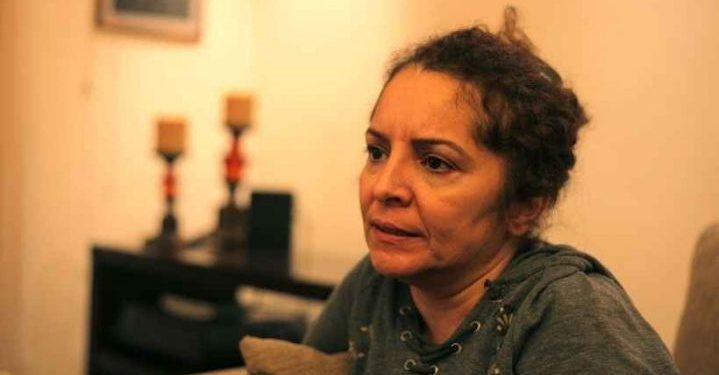
According to Kurdistan Press, Nazan Östundag, one of the professors who signed the Peace Academics' Statement, in a speech, considered the current peace process to need to determine two basic issues in order to pass the disarmament stage and reach a sustainable political solution.
In an interview with Gene News, Nazan Östundag said: "This issue can be defined by releasing Öcalan, determining his legal status and providing him with full communication with the outside world.»
He considered the second issue to be the provision of conditions for the participation of PKK members in politics and added: “Conditions must be created for the entry of PKK members, including the leaders of this organization, into political life.”
Referring to the adoption of the Framework Law, Östundag said that the peace process is expected to enter the implementation phase; however, the timetable for the implementation of the law and the way in which the subcommittees and committees will operate have not yet been clearly announced.
According to him, Abdullah Öcalan’s position in the process, how to coordinate disarmament and the transition to democratic politics, and the structure of the oversight commission to be formed in parliament are still unclear issues.
Today’s conditions are different from 2013
Stating that the current process is proceeding in a different political situation and government structure than the 2013 negotiations, Östundag said that the expectations and opportunities available should be presented from a realistic but consistent position.He added: “The conditions of 2013 do not exist now. This process continues in a different world and within a different framework of government. Limiting it to the laying down of arms, as it is reflected, is problematic and this approach must be opposed.”
According to Östundag, the main issue should be to determine a line of struggle and mobilize public opinion in this direction. He emphasized that the framework law should not be expected to solve the Kurdish issue alone or provide the equality demanded by the Kurds.
He said that the importance of this law is that it can provide a basis for the struggle for equality, self-government and political rights to continue through non-armed channels: “We must be clear that our expectation from this law is to create a platform for pursuing the struggle without weapons.»
Öcalan should have a more active role in managing the process
Östundag considered the lack of free conditions for Öcalan to communicate with the outside world and the uncertainty of his legal status as one of the most important obstacles to the process.
Referring to previous statements by Devlet Bahçeli, the leader of the Nationalist Movement Party of Turkey (MHP), on the need to determine Öcalan's status, he said: "From the beginning, the will for peace, organizational transformation, social change and coordination of developments in Kurdistan have been linked to Öcalan's thoughts and actions. For this reason, he should have a much more active role in managing the process."
According to Östundag, if Öcalan is to be present in a structure related to the process, he should have the opportunity to meet with different groups in society, form advisory boards and establish regular and organized communication with the PKK, like other members.He added that simply being a member of a committee without such facilities would not be effective, because Öcalan is in a completely different situation from other potential members of that structure.
Ambiguity is a tool for managing the process
Ustundağ, referring to the slow pace of the process and the rapid developments in the Middle East, said that much work still needs to be done regarding legal requirements, the development of supplementary regulations, and how to deal with PKK leaders and individuals who are outside the scope of the law.
He emphasized that this process should be considered as a long-term struggle; but at the same time, some issues should be resolved more quickly due to regional conditions.The university professor described keeping the timeline and implementation stages unclear as a common practice of authoritarian governments, saying: “Leaving time in an ambiguous state allows the government to manage the process as it wishes; on the one hand, it worries the society and on the other, it makes it passive.”
Framework law alone will not solve the Kurdish issue
Ostundag said society should know that the framework law alone will not solve the Kurdish issue and will not necessarily lead to the establishment of equal citizenship.
He added that the law could at best pave the way for building a democratic nation and continuing the political struggle of the Kurds without resorting to weapons: “We have a long process ahead of us and we must clearly define our expectations.»
According to him, at the same time, the urgency of some decisions and the long-term nature of the overall peace process must be emphasized, and society must be kept from creating unrealistic expectations about the immediate results of the law.
Peace does not mean immediate change of the entire society
Ustundağ, referring to the experiences of Northern Ireland and South Africa, said that even successful peace processes have not been able to eliminate all forms of discrimination, racism and social violence.
He added that one should not expect the entire Turkish society to change at once, because racist and patriarchal approaches and capitalist relations are deeply rooted in social structures.
However, according to Ustundağ, there are various groups in Turkey that have supported peace and equality for the Kurds for years, and now, with the start of the new process, they are gradually gaining more presence and visibility.The need to create new tools to socialize peace
Ostundağ considered the meeting between Beşiktaş's "Çarşı" fans and Amedspor fans as an example of the formation of new tools to socialize the peace process.
He said that such actions do not mean a complete change in all fans or sectors of society; but they can make groups supporting peace and a democratic solution visible in the public arena.
Ostundağ also pointed to the efforts of women's organizations to create an informal monitoring board for the process, adding that human rights organizations, labor unions and civil society organizations can also create similar mechanisms.The university professor concluded by emphasizing that tools must be created that make both veteran peace activists and young people who have recently entered the field visible: “Different sectors of society must be able to declare that they want a solution, that they believe in it, and that despite the existing risks, they support this development and have further demands.”
User comments