
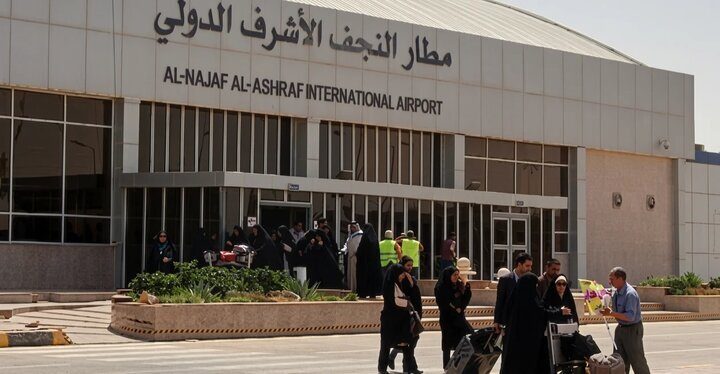
Iraqis protest widely against restrictions on Iranian flights
According to Kurdistan Press, Iraqi parliamentarian Salah al-Zuhairi criticized the restrictions on Iranian flights and said: "While people speak of the solidarity of Iraq and Iraqis, their zeal and dignity, the Iraqi government follows the decision of the infamous US Treasury Department and, by imposing a ban, prevents the operation of Iraqi airports and the movement of Iraqis and Iranians.""
He added: "Accepting the decision of the US Treasury Department means supporting the siege of our neighbors and brothers with whom we share religion, belief and destiny. Therefore, we will not be false witnesses and will not remain silent in the face of this cruel decision and declare our opposition to God, our people and our supporters."
Raed al-Maliki, a former member of the Iraqi parliament, also criticized the implementation of unilateral US sanctions against Iran and stated: "Accepting the implementation of unilateral and unjustified sanctions against a neighboring country means accepting the violation of Iraqi sovereignty."
He added: "If sanctions are imposed by a UN decision, as has happened with Iraq and other countries, even if these sanctions are unjust, it can be argued that such an action was taken based on international law and the powers of the Security Council.But when a country like the United States, which is at war with neighboring Iran, imposes unjustified sanctions against it, the implementation of these sanctions places Iraq on the side of the United States, an issue that conflicts with the Iraqi constitution and the principle of respect for good neighborliness.”
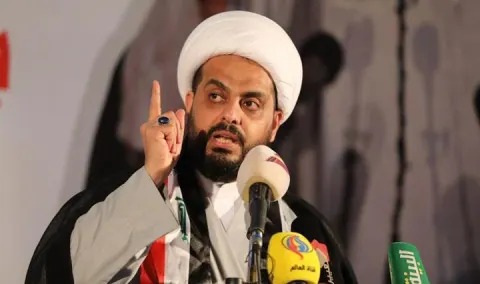
Sheikh Akram Al-Kaabi, Secretary General of the Al-Nujaba Movement, also said about the continuation of flight restrictions with Iran: “If flights with the Islamic Republic of Iran are not resumed, we will ask the Iraqi people, the processionists of Imam Hussein (AS) and the Husseini delegations to prepare for a sit-in at Iraqi airports.”
Taqi Al-Waeli, a member of the Iraqi parliament, also emphasized: “The country’s economic policy must be based on thought, creativity and calculation of national interests, not on dictates and surrender.»
Warning about economic and humanitarian consequences
Abdul Amir Al-Mayahi, a member of the Iraqi parliament, considered the suspension of flights with Iran a decision that would harm the Iraqi economy and the interests of citizens, saying: “Closing Iraqi airports to Iranian flights is a decision that hurts our economy and disrupts the interests of our people, from passengers and students to patients and businessmen, and draws Iraq into conflicts that do not serve its people.”
He added: “Iraqi sovereignty is not a place to carry out foreign orders, and we will not accept that Iraqis pay the price of cruel sanctions that have been issued by the enemies of humanity and those who have murdered nations.”
The Karbala governorate also announced that the decision to suspend flights with Iran has caused damage to the tourism sector, and as a result, complaints have been filed by businessmen and a number of students have also been affected.Former Iraqi Prime Minister Adel Abdul Mahdi also reacted to the decision, saying: “Closing Iraq’s airports to our neighboring, ally and friend is a big mistake, a retreat from national sovereignty and a sacrifice to our national interests and future. Retreating from this decision is better than persisting in a mistake.”
Miqdad al-Khafaji, a representative of the Rights Movement in the Iraqi parliament, also stated: “Stopping flights with Iran is not just an administrative decision, but an action that affects Iraq’s interests and sovereignty and raises serious questions about the level of foreign pressure. A country that stood by Iraq in the fight against ISIS should not face such a position. Iraq is an independent country and is not subordinate to anyone.”
Iraqi MP Hamed Abbas, referring to the importance of Najaf International Airport, said: “The investment feature and function of Najaf Airport and the city’s seminary should not be ignored.Najaf Airport is a provincially funded airport specifically established to serve the holy cities of Najaf Ashraf and Karbala, the Qibla and the center of Shiism in the world.”
He added: “This airport is a vital route for tens of thousands of seminary students from East Asia via Iran, as well as millions of pilgrims, patients and businessmen. Its sudden cessation of activity will hit the economic, scientific and religious realities of the holy provinces.”
Iraqi MP Hayam al-Yasiri also said that Iraq’s response to foreign pressure to ban flights with Iran would cause heavy financial losses to the country, especially at a time when the country is facing a financial crisis.
He added that the decision would also deprive thousands of patients of treatment and thousands of students of education.The head of the Najaf Ashraf governorate also expressed hope that the Iraqi federal government would not agree to the implementation of US sanctions on Iranian flights at Najaf Ashraf International Airport, because, according to him, this decision would have economic consequences for the province and would cause widespread problems for students, patients, businessmen and pilgrims.
Referring to the long-standing relations between the two countries, Iraqi MP Mehdi Taqi Amerli said: “Iraq has been living in a good-neighborly relationship with the Islamic Republic of Iran for more than a few decades; a country that has been under sanctions for more than 48 years, yet has provided Iraq with gas and electricity and its borders with Iraq have been secure.”
He added: “Iran’s position in 2014 and its role in expelling the ISIS terrorist group were also significant, but now we are faced with an unjust and unprofessional decision to close Iraq’s airspace and trade borders with Iran.»
Al-Juwaybar tribes also condemned the unjust air blockade against the Iranian people and emphasized their support for the Iranian people.
Sadr al-Din al-Qabbanji, Friday prayer leader in Najaf Ashraf, also said in response to the US sanctions against Iranian flights: “It is not right for Iraq to respond positively to these cruel sanctions, and it is not permissible for one of the conflicting parties to impose a position on us that does not serve our people, interests, and identity.”
Iraqi MP Falih al-Khazali also held the government responsible for the financial losses resulting from the implementation of the US Treasury Department’s decision against Iranian flights.
User comments