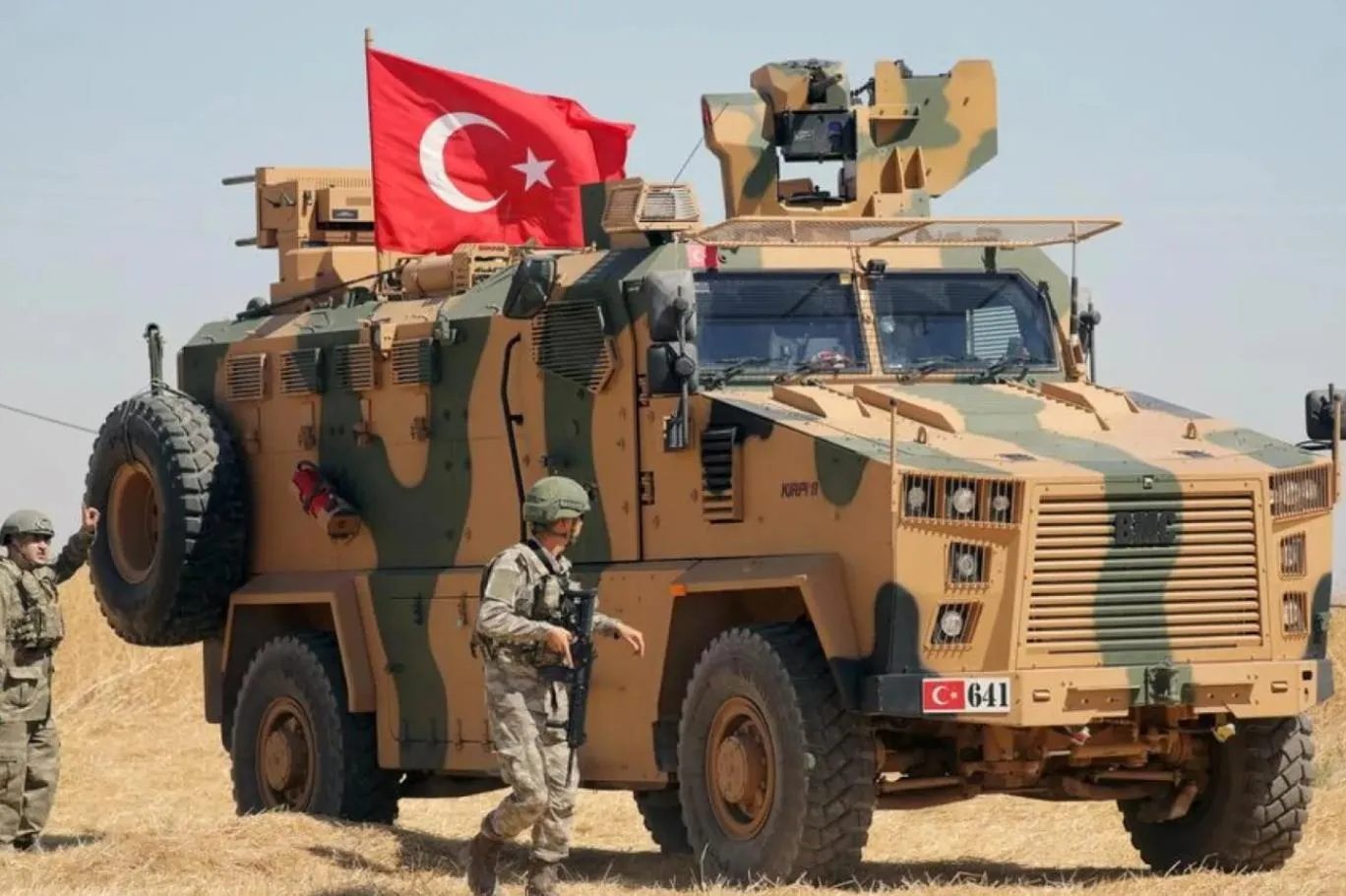
Turkey is surrounded by crises that could drag it to war
According to Kurdistan Press, Ahmed Soha Omar, a writer and foreign policy analyst, warned in an article examining developments in Ukraine, the Black Sea, the Eastern Mediterranean, tensions between Ankara and Baku, and Israel's new security doctrine that Turkey faces security risks from several directions and is likely to be drawn into wars planned by others.In an article titled “What awaits Turkey?” published in the Cumhuriyet newspaper on October 28, the journalist wrote that recent developments have necessitated a review of Turkey’s foreign policy and a reassessment of its security situation.
The risk of Turkey being dragged into the war in Ukraine
Umar, referring to Donald Trump’s change in approach to the war in Ukraine, wrote that the US president, who until recently supported Volodymyr Zelensky, has now shown signs of getting closer to Vladimir Putin and imposing an agreement under which Russia can keep the occupied territories of Ukraine.
According to him, this change in position has raised serious questions about the reliability of the US and NATO. Ahmed Soha Umar also warned that Europe may demand the use of Turkish military forces in a possible confrontation with Russia, thereby dragging Ankara into a direct war.Possibility of reopening the Montreux Convention case
Ahmed Soha Omar considered another risk facing Turkey to be developments in the Black Sea. According to him, Bulgaria and Romania, citing attacks on commercial ships in the Black Sea, have requested the support of the European Union and NATO; a demand that could pave the way for a re-draft of the Montreux Convention and efforts to amend or repeal it.
He emphasized: “Turkey must consider the fact that Bulgaria and Romania are now members of NATO and the European Union, and the United States has been trying for years to free itself from the restrictions of the Montreux Convention.»
Increasing Complexities in the Eastern Mediterranean
The Cumhuriyet newspaper writer also examined the ratification of the agreement on the delimitation of maritime zones between Turkey and Libya and considered the timing of this action to be noteworthy, as Libya ratified the agreement at a time when Turkey and Egypt had taken steps to improve their relations.
Omar wrote that the reaction of Egypt and the initiation of countermeasures by Greece, Israel and Southern Cyprus further complicated the issue. In his assessment, the rapid development of defense cooperation between Greece, Israel and Southern Cyprus showed that the ratification of the Turkey-Libya agreement could strengthen the convergence of these countries against Ankara.
He called on the Turkish government to carefully examine the possible consequences of this development and the necessary measures to counter it.The Ankara-Baku tension is more than a temporary dispute
Ahmed Soha Omar also wrote about the tension between Turkey and the Republic of Azerbaijan that it is unrealistic to attribute this dispute solely to the hijab dispute or to consider it as a temporary tension between "one nation and two states."
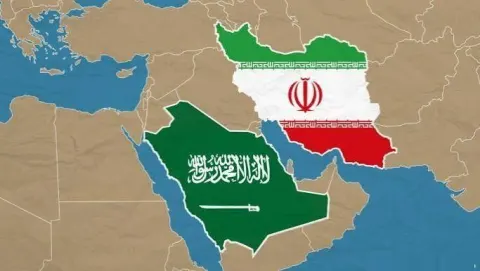
He emphasized that the Republic of Azerbaijan moved closer to the US-Israeli front due to the feeling of threat from Iran, and at the same time took into account the developments related to US-Armenia relations and the Zangezur Corridor in its calculations.
According to Omar, Baku may have considered the Mecca Agreement and the Badr Memorandum of Understanding as Turkey's indirect support for the US-Israeli front against Iran.He added that Turkey, which is facing serious security issues on three fronts, should refrain from interfering in the internal affairs of the Republic of Azerbaijan and try to keep the country as far away from the anti-Iranian front as possible so as not to face a new security threat on its eastern borders.
Warning about Israel’s new security doctrine
In another part of his article, Ahmed Soha Omar discussed Israel’s new national security doctrine. According to him, the doctrine referred to Turkey, Egypt, Pakistan and Saudi Arabia as a “Sunni coalition.”He wrote, referring to Benjamin Netanyahu's statements about trying to avoid a conflict with Turkey, that the Israeli Prime Minister also spoke about the differences between Tel Aviv and Washington about the US policy towards Ankara and the close relations between Trump and Erdogan: "These words show that if Iran withdraws from the power equation, Turkey could become Israel's new rival." He called on the Turkish government to carefully assess the possible effects of this doctrine.
The Mecca Agreement and the Possibility of Expanding the Military-Industrial Complex
Omar also wrote about the Mecca Agreement and the Badr Memorandum of Understanding. It is not yet clear which national security interests Turkey's joining these mechanisms exactly serves.
He raised the possibility that Ankara entered into these agreements with the aim of finding new markets for its defense industries and securing the interests of a limited group close to the government.In his assessment, if this possibility is true, it can be said that Turkey has also come under the influence of the “military-industrial complex”; a structure whose economic interests lead governments to adopt war-mongering policies.
Ahmed Soha Omar considered this approach to be a departure from the principle of “peace at home, peace in the world” and finally emphasized: “In a situation where developments are being planned and implemented around Turkey that could drag this country into war, the policy of the Republic of Turkey should be not to fall into these traps and to stay away from other people’s wars.”

User comments