Two years after Bahçeli's call; the peace process awaits the implementation of the framework law and the determination of Öcalan's status
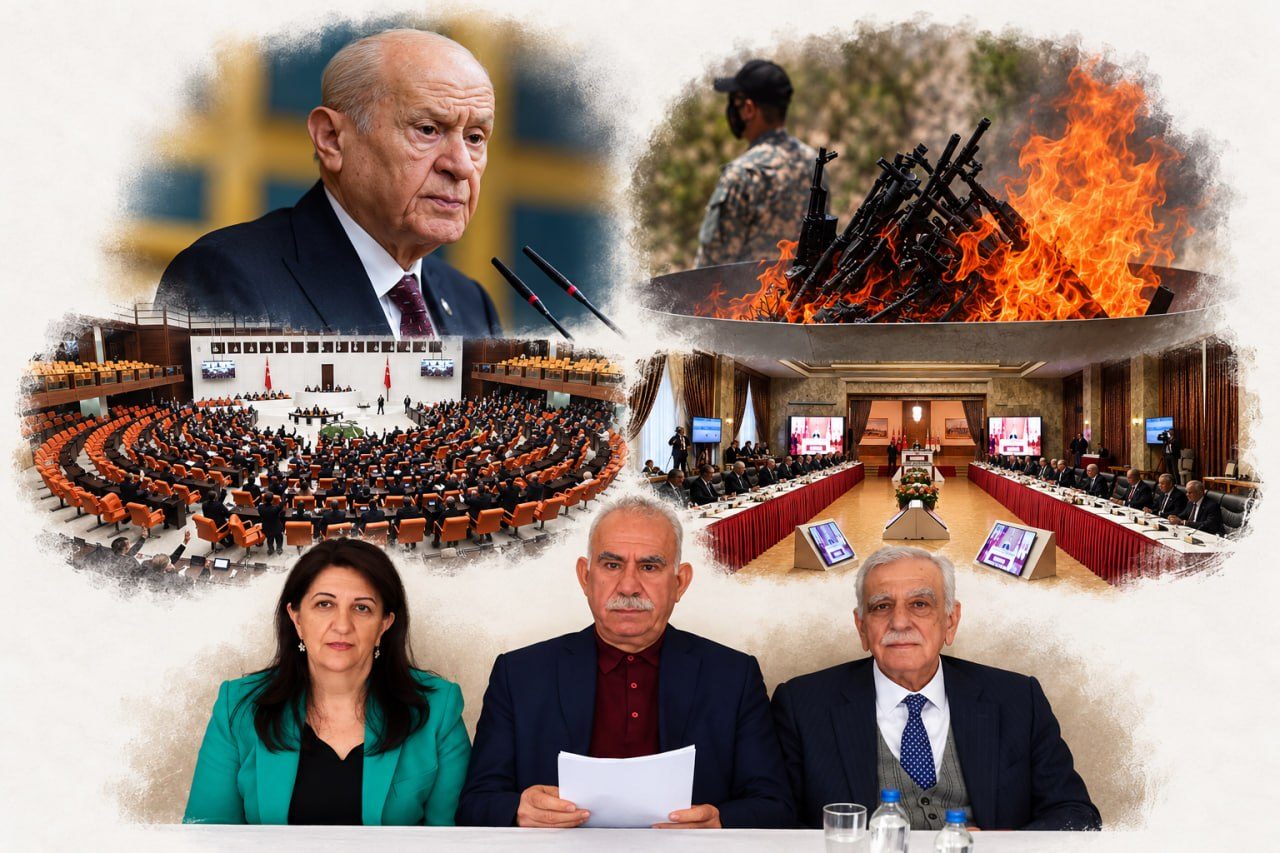
According to Kurdistan Press, the peace and democratic society process, which has been one of the most important political issues in Turkey, Kurdistan and the Middle East for the past two years, entered a new stage after the approval of the framework law; however, more than two months after the approval of this law, a specific time for its implementation has not yet been announced.
The implementation of the law depends on the approval and evaluation report of the Turkish National Security Council (MGK).Meanwhile, the conditions of Abdullah Öcalan's activities and his place in the negotiation structure are one of the central issues of discussion between the government, the DAP and the Kurdish movement.
The process begins with Bahçeli's call
On October 22, 2024, Devlet Bahçeli, the chairman of the Nationalist Movement Party (MHP), called on Abdullah Öcalan to call for the dissolution of the PKK at his party's faction meeting.
He said that Öcalan should ask his organization to end its activities and then speak in the Turkish parliament with the "right to hope."
A day after this call, Ömer Öcalan, a DAP MP and Abdullah Öcalan's nephew, went to Imrali Island and met with him in person after 9 years of severe restrictions.
Abdullah Öcalan announced in this meeting that communication restrictions would continue; but if the necessary conditions were met, he had the ability and will to transfer the conflicts to the legal and political arena.This message marked the beginning of a new phase in relations between the Turkish government and the Kurdish movement after the failure of the 2013-2015 negotiations and nearly a decade of conflict.
Call for Peace and a Democratic Society
On February 27, 2025, Abdullah Öcalan issued a call called “Peace and a Democratic Society.” In this message, he said that the existence of the Kurds is no longer undeniable, that the PKK has fulfilled its historical mission and must dissolve itself by holding a congress.
After the publication of this call, discussions on ending the armed struggle and transferring the Kurdish issue to the legal, political and democratic arenas were put on the agenda.
This call had a wide resonance in Turkey, the Kurdish regions and international circles and was considered the official starting point of a new phase of the peace process.PKK announces its dissolution
The PKK, which was founded on November 27, 1978 in the Lice district of Diyarbakir province, held its 12th congress from May 5 to 7, 2025.
The organization announced on May 12 that it had dissolved its organizational structure and ended its armed struggle strategy. Following this decision, the issue of establishing a legal framework for the disarmament, return of members of the organization and their entry into political and social life was placed on the agenda of the government and parliament.
The Kurdish movement described this decision as a historic step and called on the government to provide the necessary legal and political basis for it.
Öcalan's first video message released after 26 years
On July 9, 2025, for the first time in 26 years, Abdullah Öcalan's images and voice were released from Imrali Island.The video also featured Hamili Yıldırım, Ömer Kırıkönar, Veysi Aktaş, Ergin Atabi, Zaki Bayhan and Mahmut Yamalak, other prisoners from Imralı.
In his video message, Öcalan once again announced that the PKK had ended its armed struggle and called for a “transition to democratic politics” in Turkey.
The release of these images had a wide resonance among Kurds, with a number of writers, intellectuals, journalists and politicians also expressing their support for the continuation of the process.
Burning of weapons by 30 PKK members
Following Öcalan’s call, a group of 30 PKK members, known as the “Peace and Democratic Society Group”, symbolically burned their weapons in a ceremony in the Jasna Cave in the Sulaymaniyah province of the Kurdistan Region.
The group consisted of 15 women and 15 men, and Besseh Hozat, the co-chair of the KCK Executive Council, was also present at the ceremony.The text of the group's statement was read in Turkish by Beşe Hözüt and in Kurdish by Behzad Çarçel. The statement emphasized the need for reforms and legal guarantees to continue the process.
Journalists, lawyers, writers, politicians, intellectuals and representatives of civil society organizations from different countries attended the ceremony.
Establishment of the Peace Process Commission in the Parliament
Following these developments, a commission entitled "Democracy, Fraternity and National Solidarity" was established in the Turkish Parliament on August 5, 2025.
The commission met with representatives of the Mothers of Peace, bar associations, legal institutions, labor unions, research centers, women and youth organizations, academics and other sectors of society.
Since the beginning of the commission's activities, Kurdish parties and organizations have called for its members to travel to Imrali Island and meet Abdullah Öcalan directly.After the hearings, the Commission agreed to send a delegation to Imrali on November 21st, at its 18th meeting. The Republican People's Party (CHP) and the New Path Group did not send any representatives to the delegation.
The first official meeting of party representatives with Öcalan
Güleşteğiç Küçüğüt, the head of the Democrat Party's parliamentary group, Fethi Yıldız, the deputy chairman of the MHP, and Hüseyin Yayman, the deputy chairman of the AKP, went to Imrali on November 24th and met with Abdullah Öcalan.
This was the first time that Öcalan had officially met with representatives of political parties in Imrali prison, in addition to his family, lawyers, and members of the Democrat Party's Imrali delegation.
According to published information, Öcalan spoke at the meeting about the historical relations between Kurds and Turks and called for the recognition of Kurdish rights in the four countries of Turkey, Iran, Iraq, and Syria.In its 19th session on December 4, the parliamentary commission did not publish the full text of the Imrali talks and made parts of them available to the public after being deleted. This action was accompanied by protests from the party and disagreements within the commission.
Withdrawal of PKK forces from Turkish territory
On October 26, 2025, the leadership of the Kurdish movement announced in a statement in Qandil that it would withdraw all its forces from Turkish territory and Turkish Kurdistan in order to open the path for the peace process.
In the statement, it was stated that the withdrawal of forces was carried out at the initiative of Öcalan and to overcome the deadlock created in the process.
After this action, the Kurdish movement announced that it had fulfilled its responsibilities and that now the Turkish government must initiate reciprocal legal and political measures.Seven-Article Report of the Parliamentary Commission
After six months of activity, the Parliamentary Commission approved a joint report with the agreement of the parties in its twenty-first session on February 18, 2026 and ended its activities.
In this report, the Kurdish issue was examined for the first time within the framework of the activities of a parliamentary commission and from a legal perspective. The commission's report consisted of seven articles. The first four articles were dedicated to the objectives and content of the required laws. Article five proposed the preparation of a temporary law to end the armed struggle and the return of PKK members, and article six included legal reforms.
Article seven of the report was dedicated to democratic reforms; including removing obstacles to freedom of expression and the right to organize, lifting Turkey's reservations regarding local administrations, implementing the judgments of the European Court of Human Rights, and enacting other laws to expand democratic rights and freedoms.Framework Law Passed with 468 Votes
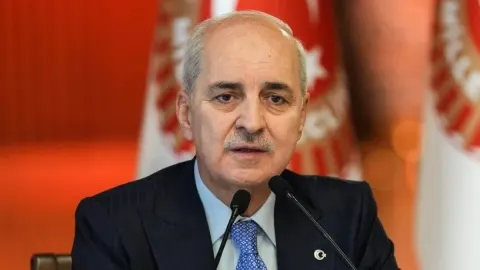
The process of drafting the framework law was postponed several times after the commission's report was published. Turkish Grand National Assembly Speaker Numan Kurtulmus had previously said that a law based on Article 5 of the report would be prepared as soon as possible; but the schedule was changed several times.
After political negotiations and meetings with Öcalan in Imrali, the 12-article text of the framework law was made public on August 5, 2026. The text was sent to the Justice Committee of the Parliament on August 7 and was approved by the General Assembly on August 10 with 468 votes.
The implementation of the law was conditional on the approval and evaluation report of the Turkish National Security Council. According to its provisions, PKK members can return to Turkey without trial; but their possible punishment will be suspended for periods of five or 10 years.People sentenced to aggravated life imprisonment before 2005, as well as those convicted of murder cases, are excluded from some of the benefits of this law.
According to the law, the possibility of the release of people sentenced to aggravated life imprisonment after 2005 is provided by suspending the execution of the sentence. People who were forced to leave the country due to political activity can also return with the suspension of their sentence.
Öcalan: Framework Law is the Starting Point
After the approval of the Framework Law, Abdullah Öcalan, in a message conveyed by the İmralı Party delegation, described the law as “the beginning of a long path.”
He said: “A journey of a thousand kilometers begins with a single step. With this law, we begin our long journey to solve a historical issue. We are at the beginning of a democratization process that is as important as the establishment of the Republic.»
Öcalan added: “This process is not just for the Kurdish people or a section of society; it is a necessity for all those living in this land. The step that is taken will affect the fate of the country and the region and will open the way for the expansion of democratic rights and economic opportunities.”
He emphasized that not all issues have been resolved yet, but there are no conditions that justify a negative approach: “It is important that this step is understood correctly and that everyone takes responsibility for the success of the process. The law that formulates the policy is the key to opening the path and opens the door to a democratic republic.”
Formation of the Follow-up and Evaluation Board
After the publication of the Framework Law in the Turkish Official Gazette, a Follow-up and Evaluation Board was formed under the chairmanship of Vice President Cevdet Yılmaz.The ministers of justice, interior, foreign affairs and defense, the secretary general of the presidency, the secretary general of the National Security Council and İbrahim Kalın, head of the Turkish Intelligence Agency (MIT), are present in the delegation.
The delegation has held two meetings so far and four subcommittees have been formed under its supervision.
According to the proposed plan, Abdullah Öcalan is to play a role in the “Peace Coordination and Political Entry” mechanism and participate in the management of the process; however, his official title, powers and terms of operation have not yet been publicly announced.
Numan Kurtulmus is also expected to meet with political parties and pave the way for the formation of a parliamentary oversight committee. The committee could make new legislative proposals if necessary and request a report from the Follow-up and Evaluation Committee on the implementation of the Framework Law.Implementation of the law awaits the report of the National Security Council
The Turkish National Security Council is scheduled to meet at the end of November under the chairmanship of Recep Tayyip Erdogan. One of the main topics expected at the meeting is to review the approval and evaluation report and prepare the ground for the implementation of the framework law.
After the law comes into force, the next stage of the process is expected to begin, focusing on Article 7 of the parliamentary commission report and reforms related to democratization.
However, more than two months after the law was passed, there is still no clear timetable for its implementation. The Kurdish movement says it has taken all the steps expected of it and now it is the Turkish government’s turn to take reciprocal steps.
Öcalan: Framework Law is the Starting Point
In a message delivered by the İmralı Party delegation after the Framework Law was passed, Abdullah Öcalan described the law as “the beginning of a long journey.”
He said: “A journey of a thousand kilometers begins with a single step. With this law, we begin our long journey to resolve a historical issue. We are at the beginning of a democratization process that is as important as the establishment of the republic.”
Öcalan added: “This process is not just for the Kurdish people or a section of society; it is a necessity for all those living in this land. The step taken will affect the fate of the country and the region and will pave the way for the expansion of democratic rights and economic opportunities.»
He stressed that not all issues have been resolved yet, but there are no conditions that justify a negative approach: “It is important that this step is understood correctly and that everyone takes responsibility for the success of the process. The law that formulates the policy is the key to opening the path and opens the door to a democratic republic.”
Formation of the Follow-up and Evaluation Board
After the publication of the Framework Law in the Turkish Official Gazette, the Follow-up and Evaluation Board was formed under the chairmanship of Vice President Cevdet Yılmaz.
The ministers of justice, interior, foreign affairs and defense, the secretary general of the presidency, the secretary general of the National Security Council and Ibrahim Kalin, head of the Turkish Intelligence Agency (MIT), are present in the board.
The board has held two meetings so far and four subcommittees have been formed under its supervision.According to the proposed plan, Abdullah Öcalan is to play a role in the “Peace Coordination and Political Entry” mechanism and participate in the management of the process; however, his official title, powers and terms of service have not yet been publicly disclosed.
Numan Kurtulmus is also expected to meet with political parties and pave the way for the formation of a parliamentary oversight committee. This committee can submit new legislative proposals if necessary and request a report from the Monitoring and Evaluation Committee on the implementation of the Framework Law.
Implementation of the law awaits the report of the National Security Council
The Turkish National Security Council is scheduled to meet at the end of November under the chairmanship of Recep Tayyip Erdoğan. One of the main topics expected at the meeting is the examination of the approval and evaluation report and preparation for the implementation of the Framework Law.After the law comes into force, the next stage of the process is expected to begin, focusing on Article 7 of the parliamentary commission report and reforms related to democratization.
However, more than two months after the law was passed, there is still no clear timetable for its implementation. The Kurdish movement says it has taken all the steps expected of it and now it is the turn of the Turkish government to take reciprocal steps.
Öcalan’s status; the central issue of the current stage
Determining the status of Abdullah Öcalan and improving his conditions of activity and communication is now one of the main issues of dispute in the process.
Representatives of the Kurdish movement and Kurdish political parties say that without providing Öcalan with the opportunity to work freely, meet with different groups in society and convey his views to the public, the process will be difficult to progress.AKP officials had spoken in August about the possibility of journalists meeting Öcalan on Imrali Island, but no action has been taken so far.
The Kurdish movement emphasizes that despite the steps taken by the PKK over the past two years, the government has not yet taken any concrete steps to improve Öcalan's legal and communication conditions. From this perspective, the implementation of the framework law and the formal determination of Öcalan's status are two main conditions for the peace process to move beyond the current stage.
User comments