
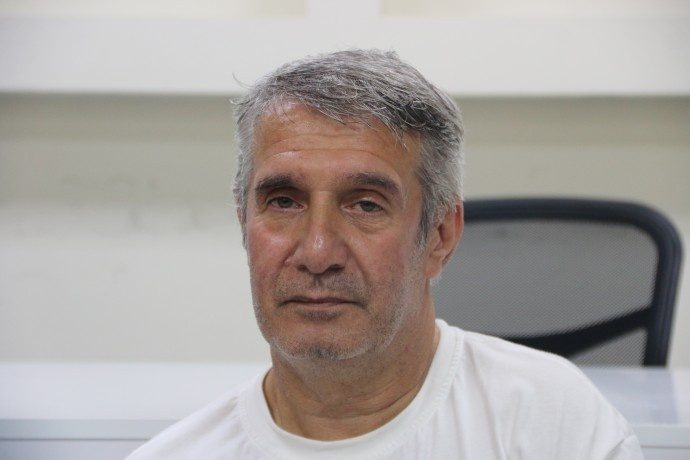
Veysi Aktaş: Öcalan's legal and political status must be recognized
According to Kurdistan Press, Veysi Aktaş evaluated the latest developments in the "peace process and democratic society" in an interview with the Spanish newspaper "Rebellion", which has been published in this country for about 30 years.
Referring to Abdullah Öcalan's February 27 call, Aktaş said that an important stage has been passed with the dissolution of the PKK and the laying down of weapons; however, due to the lack of practical steps in the field of democratization, it is not yet possible to speak of peace.A member of the Imrali Secretariat said about Öcalan's status: "Mr. Öcalan's political and social influence is a fact. Ignoring this fact would mean ignoring one of the main actors in the process. His legal status should be determined within the framework of the laws of a democratic state."
He added that regular communication and meetings should be possible in Imrali, and that Öcalan could meet with lawyers, political representatives and members of parliament as part of a peace mechanism.
Aktaş continued: "In order for the process to proceed in a healthy manner, it is necessary for Mr. Öcalan's role as the official interlocutor and coordinator of the process to be legally recognized."
Four essential steps to advance the process
Aktaş described the adopted framework law as the beginning of a process rather than the final law, saying that the necessary legal basis for the transition to "democratic integration" should be provided.He listed four main steps for the continuation of the process, saying that in the first step, trust must be built between the parties and a basis for dialogue must be provided. It is also necessary to form a “Permanent Peace and Democratic Society Commission” with broad consensus under the supervision of the parliament and with the presence of representatives of all parties.
According to Aktaş, the second step is the legal recognition of Öcalan’s role. In the third step, new laws must be passed after the framework law and democratic reforms must be made to the constitution. Expanding political freedoms and the right to organize, guaranteeing the rights of the Kurdish language and culture, ending the appointment of supervisors for municipalities, and amending the anti-terrorism law are also included in this stage.
Regarding the fourth step, he said that the current process must become a process of democratization throughout Turkey, and the democratic solution of the Kurdish issue must also pave the way for the establishment of a democratic republic.The Need for the Democratic Integration Law
Pointing to the shortcomings of the Framework Law, Aktaş said that although the law provides some guarantees regarding the return of armed members of the Kurdish movement, the release of political prisoners, and the return of people who have been forced to live abroad due to their ideas and activities, it is still far from guaranteeing integration into a democratic society.
He considered one of the most important shortcomings of the law to be the lack of guarantees for the safe return of armed people, saying: "You cannot simply tell a guerrilla to lay down his arms and return. It must be guaranteed how he can live in security and freedom and enjoy his rights as an equal citizen. The legal guarantee of peace must have an objective and tangible impact on people's lives.»
Democratic Integration vs. Assimilation
A member of the Imrali Secretariat said that “democratic integration” was proposed by Öcalan as a third way against forced assimilation and cultural assimilation.
According to him, democratic integration for the Kurdish people means that while preserving their language, culture and identity, they voluntarily participate in the state structure and enjoy an equal position with other citizens.
Aktaş added that this concept in practice requires removing obstacles related to Kurdish geographical names, ensuring political representation, establishing economic and political equality, and recognizing the linguistic and cultural rights of the Kurds, and is related to Öcalan’s “democratic nation” paradigm.Aktash concluded by saying that Abdullah Öcalan has always emphasized the need to pass three fundamental laws: the “Law on a Democratic Society” based on a culture of peace, the “Law on Free Citizenship” and the “Law on Local Democracy”.
He added: “Democratic integration can be explained with three concepts: equality, identity and free will.”


User comments