
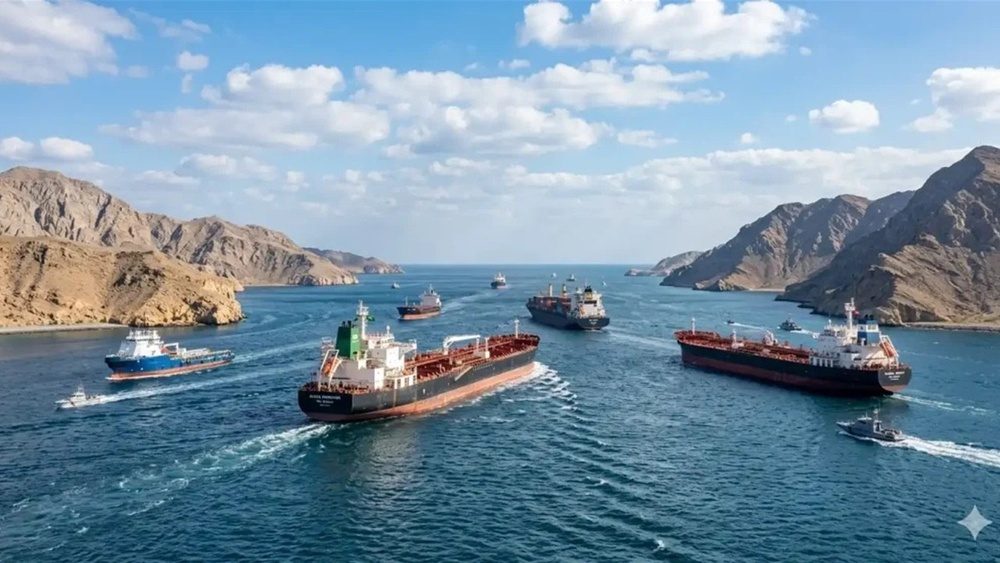
The US, Russia and China compete for influence in Iraq
According to Kurdistan Press, Iraq has once again become one of the most important arenas of competition between major powers, but this time the competition is not in the form of military competition, but over oil, energy contracts and strategic infrastructure. Simon Watkins, in an analysis in "OilPrice", believes that Washington is trying to use Russia's gradual retreat and China's limited room for maneuver to strengthen the position of American and Western companies in the Iraqi oil industry.
Iraq's importance for this competition goes back to its huge oil reserves.The country has about 145 billion barrels of proven oil reserves, making it among the world’s largest oil reserves holders. The cost of producing oil in many of Iraq’s fields is also very low, around $2 to $4 per barrel. In addition, Iraq’s geographical location in the center of the Middle East, between Iran, Turkey, Syria, and the Arab states of the Persian Gulf, has linked its energy importance to geopolitical considerations.
Watkins writes that Russia and China have been able to take over a significant part of Iraq’s economic and energy space in recent years. Russia has gained a large presence, especially in the Kurdistan Region’s oil sector, and Chinese companies have also become important players in the oil industry in southern Iraq.According to the analyst, cooperation agreements between Baghdad and Beijing in 2019 and 2020 paved the way for Chinese companies to expand their presence in oil, infrastructure, and refining projects.
Meanwhile, Russia has also gained a significant foothold in northern Iraq by investing in the energy sector of the Kurdistan Region. This situation has led to Moscow and Beijing being present in important parts of Iraq’s oil industry at the beginning of Donald Trump’s second term as president, an issue that Washington sees as limiting American economic and political influence in Iraq in the long term.
But that balance has been changing in recent months. According to Watkins, US sanctions on some Russian companies, pressure on networks linked to Iran, and efforts to limit China’s energy activities have come at the same time as American and European companies have returned to major Iraqi oil projects.One of the most important examples is ConocoPhillips’ agreement to buy a 42% stake in BP Energy Kirkuk from BP. The American company will thus participate in the development of five oil fields in the Kirkuk region: the Baba Gurgur and Awaneh fields in the Kirkuk structure, as well as Bi Hassan, Jambur and Khabaz.
The project is part of BP’s $25 billion development plan in Kirkuk. According to information cited by OilPrice, the initial target for the project is to produce about 328,000 barrels of oil per day, which could increase to at least 450,000 barrels per day over the next two to three years. The reserves of the five fields are also estimated at at least 9 billion barrels, although Iraqi sources cited by Watkins believe that the actual capacity of the area could be much higher.
The importance of ConocoPhillips’ presence in Kirkuk is not limited to increasing oil production.Kirkuk is one of Iraq’s most politically and economically sensitive regions and has been a point of contention between Baghdad and the Kurdistan Region in recent years. The entry of a major American company into such a region could allow Washington to play a greater role in the future developments of northern Iraq’s energy sector.
The United States is also strengthening its position in southern Iraq. Chevron has entered the field to develop the field after Russia’s Lukoil withdrew from the West Qurna 2 project. West Qurna 2, with about 14 billion barrels of oil reserves, is one of Iraq’s largest fields and was producing about 400,000 barrels per day before the Russian company’s withdrawal.
The field’s development plan seeks to increase production to 480,000 barrels per day in the second phase and further increase it in the third phase through the development of the Yamama layer. The ultimate goal is about 1.13 million barrels per day.Realizing such capacity could make West Qurna 2 one of the main engines of increasing Iraqi oil production.
Chevron has also entered into serious negotiations to develop the Nasiriyah field in Dhi Qar province. The field has about 4.36 billion barrels of oil reserves and its development plan has been on the agenda of various Iraqi governments for decades. One of the proposed plans for Nasiriyah is to develop the field along with the construction of a refinery with a capacity of 300,000 barrels per day.
These developments are taking place at a time when Baghdad has set an ambitious goal to increase oil production. According to OilPrice, the Iraqi government is looking to increase production to 8-10 million barrels per day over the next six years. Achieving this goal depends on foreign investment, developing new fields, increasing transmission and export capacity, and developing infrastructure such as water supply facilities needed by the oil industry.In such circumstances, companies that enter Iraq’s major projects today will not only benefit from future oil revenues; they could also play a role in shaping the development path of Iraq’s oil industry. Therefore, the competition between Washington, Beijing and Moscow over Iraq is largely a competition for presence in the next generation of the country’s oil industry.
The Kurdistan Region also has a special place in this competition. Russia was one of the main players in the region’s oil industry in recent years, but US pressure and Western sanctions have weakened the position of Russian companies. At the same time, the increased presence of American and British companies could change the external balance in the region’s energy industry.
This development is also important in terms of Erbil-Baghdad relations.The increased role of Western companies in northern Iraq comes as Baghdad continues to seek greater control over the region’s oil exports and energy revenues. As a result, the involvement of American companies in projects like Kirkuk could indirectly affect economic and political relations between the central government and the Kurdistan Region.
The US-China oil rivalry in Iraq also has broader dimensions. China remains a major buyer of Iraqi oil and an investor in the country’s energy sector, and is seeking to establish a chain of exploration, production, refining and export activities in southern Iraq. In contrast, Washington is trying to prevent this presence from becoming a long-term Chinese dominance of Iraq’s energy infrastructure.Although Russia still has a presence in Iraq through some investments and political ties, the war in Ukraine and the pressure of Western sanctions have reduced Moscow’s ability to maintain its previous position. The withdrawal of Lukoil from the West Bank and the reduction of the presence of Russian companies in the Kurdistan Region are signs of this change.
In this way, Iraqi oil has become one of the main tools for reshaping the balance of power in the Middle East. The United States, through companies such as ConocoPhillips and Chevron, is returning to projects that could significantly increase Iraq’s production capacity in the future. China is trying to maintain its position in the south, and Russia is also trying to prevent the complete loss of its energy influence.
Meanwhile, the increase in Iraqi production to 8-10 million barrels per day, if realized, will double the importance of this competition.Iraq could become one of the world’s most important sources of increased oil supply, and the country that controls a greater share of the development of its fields and energy infrastructure will enjoy not only economic benefits but also greater political influence in Baghdad and the region.
So, what is happening in Iraq’s oil industry today is not simply the shifting of a few contracts between oil companies. Russia’s gradual withdrawal from some projects, China’s efforts to maintain its position, and the re-entry of American companies are signs of a shifting balance that could have consequences beyond the energy market. Iraq is becoming one of the most important arenas of economic competition between the United States and China in the Middle East; a competition that has oil at its center, but will eventually extend to political, security, and geopolitical influence.

User comments