
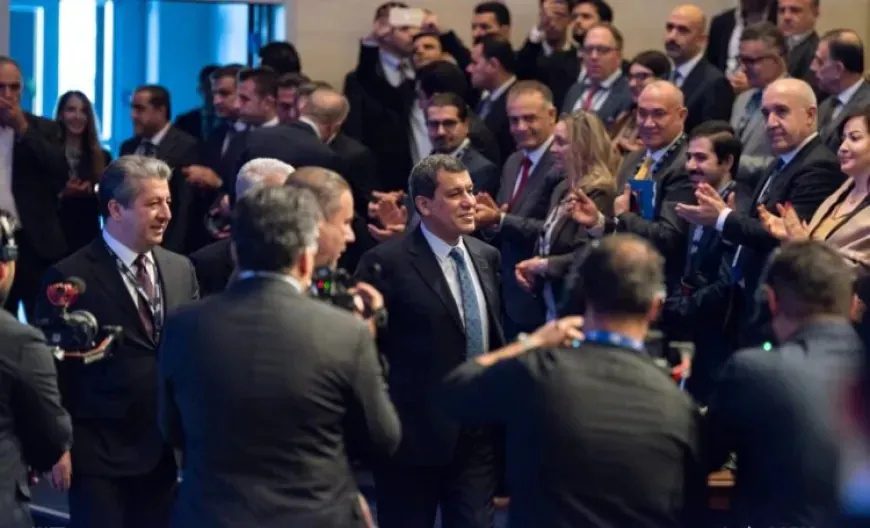
The fate of the Kurds after the dissolution of the Syrian Democratic Forces
According to KurdPress, the dissolution of the Syrian Democratic Forces (SDF) as an independent military force, which was announced on the evening of Tuesday, August 25, 2026, by Mazloum Abdi (Kobani), is considered the most important development in the process of integrating the Kurdish forces into the structure of the Syrian government. Abdi said at the Syrian Presidential Palace in Damascus that the SDF's mission has ended and that after completing the process of integrating the group's forces into the Syrian army, this force will no longer operate as an independent force.Reuters reported that the decision was an important step in implementing the merger agreement between Damascus and the SDF that was reached at the beginning of this year. In his speech, Abdi described the development as the beginning of a new phase for Syria, saying that the country was entering an “era of weapons” to an “era of peace.” He stressed that the SDF had borne a heavy responsibility during one of the most difficult periods in Syrian history, and that its forces had made great sacrifices in the fight against ISIS and in the conflicts of previous years. Al Jazeera also reported that Abdi announced the dissolution of the SDF within the framework of the agreement with the government of Ahmed al-Sharaa, emphasizing that the group’s forces would no longer operate independently after merging with the Syrian army.The development comes after the SDF integration process took more than seven months, during which there were disagreements over how to organize the forces, heavy weapons and the status of the Women's Protection Units. According to Al Jazeera, one of the unresolved issues was the future of the Women's Protection Units, the YPG, which wanted to be integrated into the Defense Ministry and continue operating as a military force, while Damascus had proposed transferring them to the Interior Ministry and operating as a police force. These disagreements were among the factors that delayed the official announcement of the SDF's dissolution. Reuters reported that the initial agreement between Damascus and the SDF included the phased integration of Kurdish forces into the Syrian army, and this agreement was formed after government forces recaptured large parts of SDF-controlled areas during a military operation in January.According to the same report, the People's Protection Units, which form the core of the SDF, had previously been integrated into the structure of government forces, and Sipan Hamo, one of the former commanders of the force, was appointed deputy defense minister responsible for eastern Syria in March. In a report published following the announcement of the dissolution of the SDF, the Foundation for Defense of Democracies assessed this development as the end of more than a decade of de facto Kurdish autonomy in northeastern Syria. According to Ahmed Sharawy, an analyst at the foundation, about 10,000 SDF forces have so far joined the Syrian army, and the final number of integrated forces may reach about 12,000. These forces are organized into brigades in Hasakah, Qamishlo, Dirak, and Kobani, and some former SDF commanders have also taken on responsibilities in the new structure of the Syrian army. This process is not limited to the military forces.According to the same report, the SDF's internal security forces, known as Asayesh, have also been integrated into the Syrian Interior Ministry, while Damascus has simultaneously taken control of a significant part of the economic and administrative infrastructure of northeastern Syria. Oil and gas fields, border crossings, and Qamishlo International Airport are among the structures that have come under the control of the central government as part of the integration process. Also, about 20,000 employees of the region's education sector have been transferred to the Syrian Ministry of Education, and a number of employees in the health and electricity sectors have also been absorbed into government structures. However, the dissolution of the SDF does not mean the end of all existing structures in northern and eastern Syria, and more importantly, it is still unclear to what extent the political and cultural rights of the Kurds will be consolidated in the new structure.Al Jazeera reported that the Damascus-SDF agreement also includes the recognition of the cultural, civil and educational rights of the Kurds. Mazloum Abdi also emphasized in his speech the preservation of the right to education in Kurdish and said that efforts to implement the right to education in Kurdish will continue from this year. At the same time, the United States welcomed the agreement and the dissolution of the SDF. Tom Barak, Donald Trump's special envoy for Syria, described the development as historic and said that Trump's leadership has paved the way for the orderly integration of the SDF into the institutions of the Syrian government. Barak emphasized that the recognition of the Kurdish language in the Syrian education system and the effective roles played by Mazloum Abdi and Ilham Ahmed in the government structure are part of this agreement. He called this development an example of "real integration" and raised the slogan "one army, one government, one country" as the basic principle of the agreement.The official Syrian news agency, SANA, also issued similar statements, saying that Washington sees this development as a historic step towards strengthening Syrian sovereignty. Al Jazeera, citing the statements of Saleh Mubarak, a Syrian-American expert, wrote that the dissolution of the SDF could also affect other Syrian armed groups and help strengthen the idea of a united Syria. However, the same analysis warns that the government of Ahmed al-Sharaa has so far faced some gaps in fulfilling the expectations of the Kurds in northeastern Syria, including in the area of linguistic rights. From this perspective, the current agreement is not the end of the Kurdish issue, but the beginning of a phase in which the manner in which Damascus’s commitments are implemented will become more important. The Al-Sharq Al-Awsat newspaper also emphasized in its report that the meeting between Ahmed al-Sharaa and Mazloum Abdi at the presidential palace took place following the announcement of the dissolution of the SDF and its integration into the institutions of the Syrian government.The report shows that Damascus is trying to use the dissolution of the SDF as one of the most important steps to restore the authority of the central government in northern and eastern Syria. Meanwhile, analytical reports published after the announcement of the dissolution have a different view of its consequences. Longwar Journal considered this development the end of a decade of de facto autonomy under Kurdish leadership and assessed it as one of the most important steps by Damascus to restore central authority throughout Syria. In contrast, some analyses published in regional media emphasize that the main issue now is not the fate of the SDF, but the future of the political and legal arrangements of the Kurdish regions; because the dissolution of the military structure does not in itself determine how much authority and guarantees the Kurds will have in the new political structure of Syria. This is important because the SDF was not simply a military force.During the years of war, the group had created separate security, administrative and economic structures in northern and eastern Syria, along with self-governing administration. Now, with the integration of these structures into the central government, an important part of the Kurdish self-government experience in Syria has come to an end. On the other hand, for the first time, some of the Kurdish demands, including education in the Kurdish language and the participation of Kurdish political figures in the central government structure, have been raised within the framework of a formal agreement with Damascus. As a result, the dissolution of the SDF cannot be considered a purely military development. This decision simultaneously indicates a reduction in the Kurds’ independent bargaining power, a strengthening of the authority of the central Syrian government, and a change in the US approach towards the forces that for years were Washington’s most important ground partner in the war against ISIS.Both Reuters and Al Jazeera have highlighted this shift in position, particularly as Washington has expanded its relations with the new government in Damascus since the fall of Bashar al-Assad, and direct US support for the former SDF structure has gradually declined. The most important question now is whether the dissolution of the SDF will lead to the real integration of the Kurds into the Syrian political structure or simply mean the end of their independent military and administrative structure. The implementation of Kurdish-language training, the status of Mazloum Abdi and Ilham Ahmed, the status of the YPG, the extent of local authority and, most importantly, the place of Kurdish rights in the Syrian constitution, are factors that will determine in the coming months to what extent this agreement has become a sustainable compromise.Therefore, the August 25 development should be seen as the end of one stage and the beginning of a new one in the Syrian Kurdish issue, in which the main issue is no longer the preservation of an independent military force, but rather ensuring that integration into the central government does not entail the loss of political, cultural and educational rights for the Kurds. Indeed, as Al Jazeera quoted Saleh Mubarak as saying, “This is not the end of the story,” and the more difficult part of the agreement is the implementation of the commitments that are to be fulfilled in the new Syrian structure after the dissolution of the SDF.


User comments