
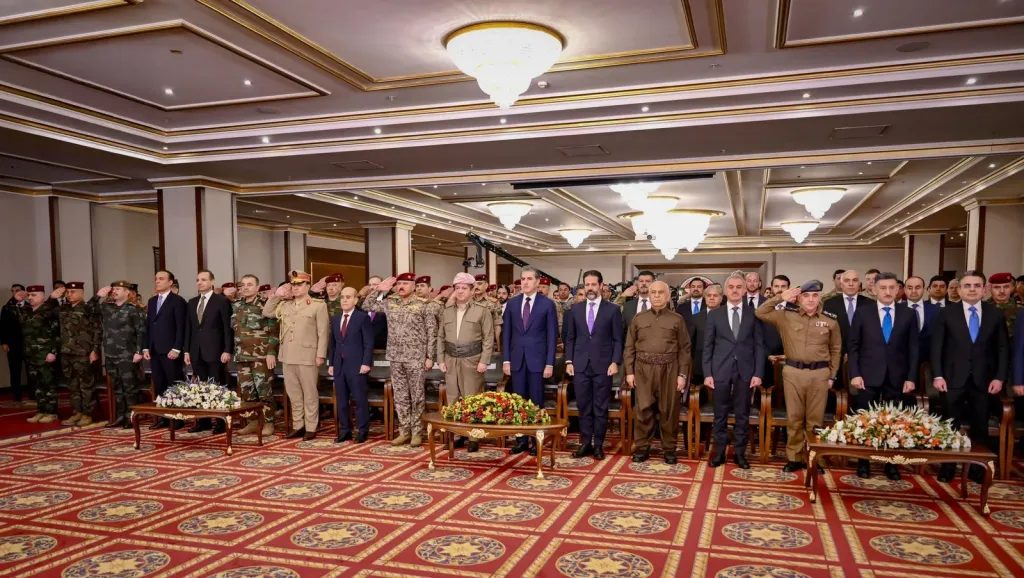
The integration of the Peshmerga forces is not the end of the military divide in the Kurdistan Region.
According to KurdPress, the Long War Journal, a publication affiliated with the Foundation for Defense of Democracies, assessed the official announcement of the integration of the Peshmerga forces in the Kurdistan Region of Iraq as important in the circumstances in which the region is facing the gradual withdrawal of American forces from Iraq, Baghdad's efforts to place all armed forces within the framework of the official government structure, and continuing political differences between the Kurdistan Democratic Party and the Patriotic Union.The Kurdistan Regional Government (KRG) announced the completion of the integration of the Peshmerga forces at a ceremony in Erbil on September 21. The ceremony was attended by Prime Minister Masrour Barzani, President Nechirvan Barzani, and Deputy Prime Minister Qubad Talabani; the presence of senior figures from the region’s two main political movements, the Kurdistan Democratic Party (KDP) and the Patriotic Union (PU) underscores the importance of this development in relations between the two parties.
Masrour Barzani said the integration process had been underway for the past four years and had been supported by the United States and the international coalition against ISIS. According to him, the new phase of the Peshmerga’s activities should focus on strengthening its military capabilities, receiving advanced weapons, developing air defense systems, and improving human capacities.According to the Long War Journal, the main goal of this process has been to reduce the role of party structures in the Peshmerga forces, an issue that dates back to the 1990s and the civil war in the Kurdistan Region. During these years, forces affiliated with the Kurdistan Democratic Party and the Patriotic Union have effectively operated in two separate structures. The 70th Force was affiliated with the Patriotic Union and the 80th Force was affiliated with the Democratic Party, and they constituted the bulk of the more than 100,000-strong Peshmerga force.
According to the new structure, the Peshmerga forces are organized into two regional commands, the first and second, and the Ministry of Peshmerga is supposed to supervise these two commands.However, the Long War Journal notes the view of National Context that the new structure may largely reproduce the traditional division between the Kurdistan Democratic Party and the Patriotic Union, with former commanders of the 70th and 80th Forces still heading the two new commands.
This is important because the integration of the Peshmerga is not simply an organizational issue, but also relates to the position of the Kurdistan Region in the Iraqi security structure. The Long War Journal writes that the official announcement of the integration comes at a time when the Iraqi government is pushing to bring armed groups under the control of the central government. From this perspective, placing the Peshmerga under the official umbrella of the Peshmerga Ministry could strengthen the region’s position vis-à-vis Baghdad and show that the region’s armed forces also operate within the framework of formal government institutions.The author also mentions the issue of the Peshmerga’s rights and benefits. Peshmerga Minister Shoresh Ismail has said that integration could pave the way for a more regular financial share from the Iraqi federal government. He also stated that the salaries of an Iraqi soldier are about twice the salaries of a Peshmerga and that this difference must be resolved. Masrour Barzani has also called for the Peshmerga’s rights and benefits to be equal to those of the Iraqi army.
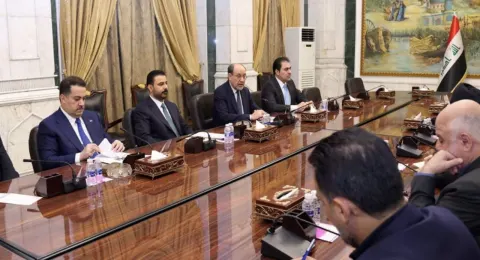
Meanwhile, Long War Journal considers the issue of air defense to be one of the region’s important demands. Sirwan Barzani, a commander of the Peshmerga, has expressed hope that the new structure will allow the region to increase its military capabilities, including in the field of air defense. This issue comes at a time when regional authorities have expressed concern over the numerous attacks on regions in the region in recent months.Baghdad has also welcomed the announcement of the Peshmerga integration. Iraqi Prime Minister Ali Zaidi has described the move as a step to strengthen national security and institutional consolidation, and has placed it within the framework of Iraq’s broader efforts to establish the country’s “unity of defense decision.”
However, the Long War Journal also notes that the integration of the Peshmerga forces has taken place in a context where political differences between the Kurdistan Democratic Party and the Patriotic Union continue to persist. Nearly two years after the regional parliamentary elections, the formation of the tenth cabinet has not yet been finalized, and the regional parliament has not yet begun its work. In the report’s view, the continued political differences between the two main parties could continue to affect the process of creating a fully integrated military structure.Overall, the FDD report sees the integration of the Peshmerga as an important step towards formalizing the region’s military structure, increasing coordination with Baghdad, and creating the basis for receiving more support and equipment; however, the legacy of the division of Peshmerga forces between the region’s two main parties remains entrenched in the structure.
User comments