
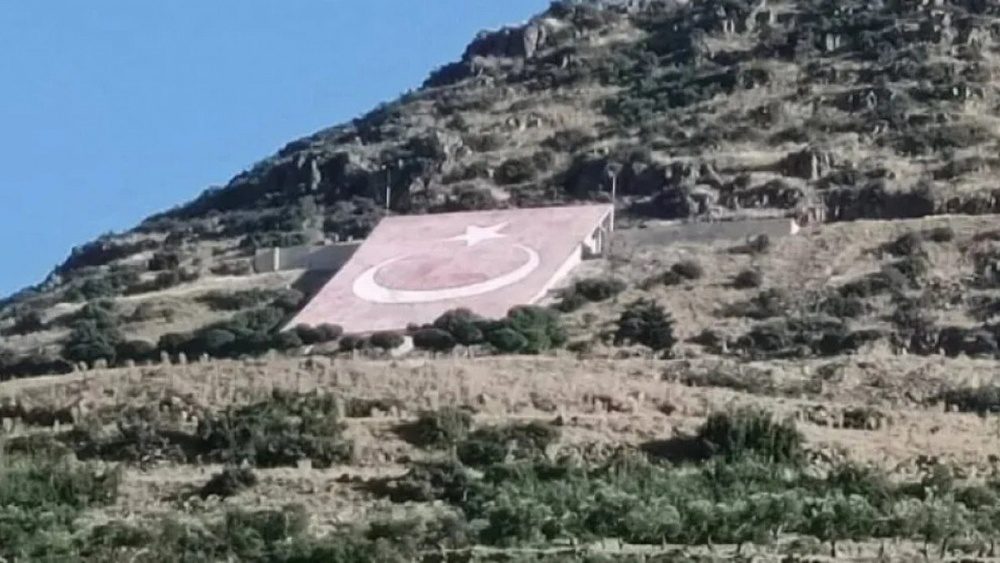
The new mission of the Turkish army in Syria after the dissolution of the Kurdish forces
According to Kurdistan Press, a former Turkish diplomat believes that the mission of the country's military forces in Syria will not end, but may change from confronting the Kurdish forces to supporting the government of Ahmed al-Sharaa in consolidating its sovereignty.The Kurdish-led, US-backed Syrian Democratic Forces, a coalition led by Kurds and playing a key role in the ground battle against ISIS in Syria, announced on Tuesday that it had ended its independent operations after transferring its military and civilian structures to the Syrian government. Turkey considers the People’s Protection Units (YPG), the main force in the coalition, to be an offshoot of the Kurdistan Workers’ Party (PKK).
Mustafa Enes Esen, a former Turkish diplomat and researcher at the Institute for Diplomacy and Economics in Brussels, told Turkish Minute that the dissolution of the SDF has weakened one of Ankara’s primary reasons for keeping its forces in Syria, but it is unlikely to lead to a withdrawal of Turkish troops.
Turkey has carried out several cross-border military operations in northern Syria from 2016 to 2019, with the stated goal of pushing Kurdish militants away from its borders.In October 2025, the Turkish parliament extended the authorization for the country's military operations in Iraq and Syria for another three years, citing threats from the Kurdistan Workers' Party, ISIS, and Kurdish armed groups in northern Syria as reasons for this decision.
Essen believes that Turkey has succeeded in a significant part of its goals against the Syrian Democratic Forces, an issue that has greatly weakened the initial logic of Turkey's military presence in Syria. However, according to him, changing conditions in Syria and Ankara's efforts to support Ahmed al-Sharaa in consolidating the authority of the central government could pave the way for Turkey's continued military presence.
He described the presence of Turkish forces in Syria as a kind of security guarantee against groups that may try to destabilize the Damascus government.Ankara and Damascus may even agree to establish more Turkish military bases in Syria in the future, the analyst believes, although such a move could increase tensions between Turkey and Israel over Ankara’s military role and influence in Syria.
Essen stressed that the Turkish military will likely remain in Syria, but with a different purpose than in the past. The Turkish government has also stated that its forces will only leave Syria when security threats against Turkey are eliminated.
However, the actual extent of the SDF’s integration into the Syrian army remains a matter of dispute.Amy Austin Holmes, a professor of international relations at George Washington University, wrote, citing a commander of the Syrian Democratic Forces, that only about 12,000 of the group’s approximately 35,000 troops have been integrated into the new structure, and the status of about 23,000 remains unclear.
The dissolution of the Syrian Democratic Forces was also assessed by Essen in the context of broader developments in the Kurdish issue in the region and the peace process between Turkey and the Kurdistan Workers’ Party. According to her, the simultaneous dissolution of the Syrian Democratic Forces and the decision of the Kurdistan Workers’ Party to dissolve itself in May 2025 are related to the links between the two movements and the new US approach towards Kurdish armed groups.Essen, citing the positions of Tom Barrack, the US ambassador to Turkey and the US special envoy for Syria and Iraq, said that Washington did not intervene earlier this year to stop the fighting between the Syrian army and the SDF, and as a result, the SDF eventually accepted conditions under which their military and civilian structures would be under the control of the Damascus government.
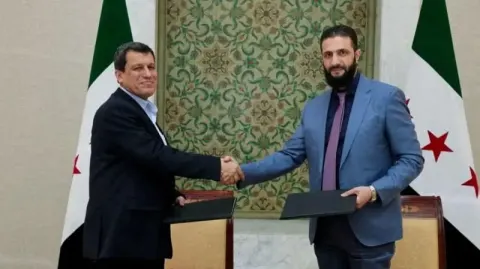
The January agreement was reached after Syrian government forces advanced on areas controlled by the SDF and included the transfer of border crossings, oil and gas facilities and ISIS detention centers to the Syrian government. Rob Geist Pinfold, a lecturer in security studies at King’s College London, also believes that the SDF lost a significant part of its leverage after the US showed it was no longer willing to support them as it had in the past.Tom Barak said in January that the Syrian Kurds’ “greatest opportunity” was to participate in Syria’s new political order. He welcomed the move after the SDF announced its dissolution, calling it a move toward “one army, one government, one country.”
According to Essen, U.S. pressure has led the SDF to conclude that the future of the Syrian Kurds lies in political integration into the new Syrian structure rather than continuing the armed struggle. The agreement with Damascus also includes recognition of some of the Kurds’ cultural rights and commitments to Kurdish language education.
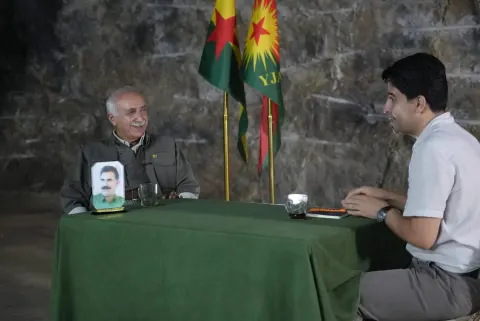
This process is also linked to developments related to the Kurdistan Workers’ Party in Turkey. Turkey’s process has so far focused mainly on the PKK laying down its arms and providing legal grounds for the group’s members to return.The Kurdistan Workers’ Party (PKK) announced its dissolution after a call by the group’s imprisoned leader Abdullah Ocalan to lay down arms and pursue Kurdish rights through political means.
The Turkish parliament also passed a law on “Strengthening National Solidarity and Social Integration” on August 10, which provides for conditional exemptions or reductions in legal fees for some PKK members, but does not provide for a general amnesty for the group’s members.
Essen also stressed that, unlike the Syrian process, the issue of Kurdish linguistic and cultural rights has not yet been formally raised in the talks between Turkey and the PKK. He added that these issues are likely to be addressed in the ongoing peace process, but that the lack of public information about the talks makes it difficult to assess its future course.Kemal Chumani, editor of Amargi and a doctoral researcher at the University of Leipzig, also wrote in an analysis of the future of the Syrian Kurds that Turkey has benefited from the new developments in Syria and that the agreement between Damascus and the Syrian Democratic Forces, along with the Turkish peace process, indicates the region’s move from armed struggle to political solutions. In his opinion, Ankara should reconsider its policies towards Kurdish identity in such circumstances.
The new developments in Syria and the process of dissolving the Kurdistan Workers’ Party could also affect Turkey’s military presence in northern Iraq. Turkey still has several military bases in northern Iraq and, before the new peace initiative, carried out extensive ground and air operations against the Kurdistan Workers’ Party; a presence that has always caused disagreement between Ankara and Baghdad.If the dissolution of the PKK is finalized and the group’s armed presence ends, it will also be harder for Turkey to justify its continued presence in Iraq, Essen believes. However, the current authorization from the Turkish parliament for its military operations in Iraq and Syria is valid until October 2028.
Overall, the dissolution of the SDF does not necessarily mean the end of Turkey’s military role in Syria. On the contrary, Ankara appears to be moving from a policy of containing and confronting the Kurdish military establishment to one in which Turkey’s military presence can serve to support the central government in Damascus and maintain Ankara’s influence in the new security arrangements in Syria. Meanwhile, if the dissolution of the PKK also becomes established, pressure to redefine Turkey’s military presence in northern Iraq will increase.

User comments