
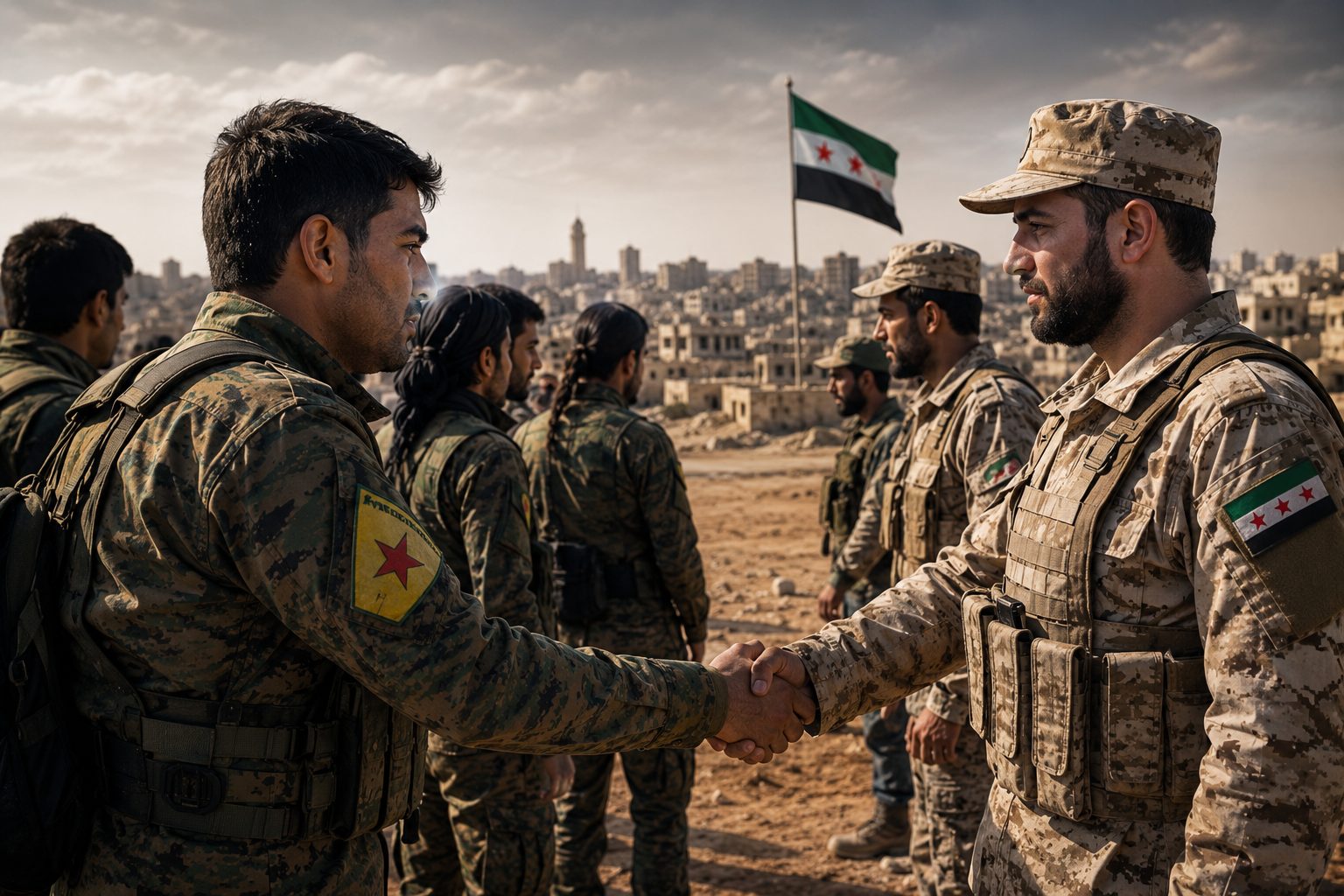
The Beginning and End of Kurdish Rule in Syria
According to KurdPress, the developments in Damascus on August 25, 2026 marked the end of more than a decade of de facto Kurdish rule in northern and northeastern Syria; a period that began in the power vacuum caused by the civil war, culminated with the formation of the Syrian Democratic Forces and the creation of an autonomous structure, and finally ended with the dissolution of these forces and the military and administrative integration of the areas under their control into the Syrian government.However, a series of published reports and analyses show that this development cannot be seen as a mere defeat or surrender of the Kurds, because in the face of the loss of a significant part of their territorial and military power, the Syrian Kurds have now found the opportunity to achieve rights that they were deprived of for decades.
In his analysis entitled “What awaits the Syrian Kurds?”, Kamal Chomani describes this development as a “historic moment” for Syria and the Kurds. In his view, the Damascus Agreement is important because for the first time, Kurdish language education is on the verge of official recognition and the Kurds are to be recognized as one of Syria’s future partners, rather than being considered merely guests or a marginal minority.Chomani emphasizes that the success of this process is not yet certain, but in a situation where Syria is engaged in competition between regional and international powers, this agreement could be the best realistic outcome available for the Kurds.
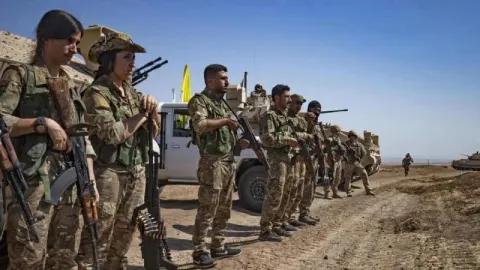
It is impossible to understand this development without considering the roots of Kurdish rule. The Associated Press recalls that the Syrian Democratic Forces were formed in 2015, at the height of the civil war and in the context of the fight against ISIS, and later managed to create an autonomous region in northeastern Syria that at one point covered about 25 percent of the country's territory. The coalition was mainly composed of Kurdish forces, but Arab groups were also present, and the United States became its most important military supporter.
Over the years of the war, this structure transformed from an anti-ISIS military force into a multi-layered political and military institution.In the areas under its control, administrative institutions, security forces, educational structures, and economic mechanisms were formed, and the management of a significant part of the region's resources was also entrusted to this structure. Therefore, what had been formed in northeastern Syria, although not legally an independent state or even a formal autonomous region, was in practice a form of self-governing rule.
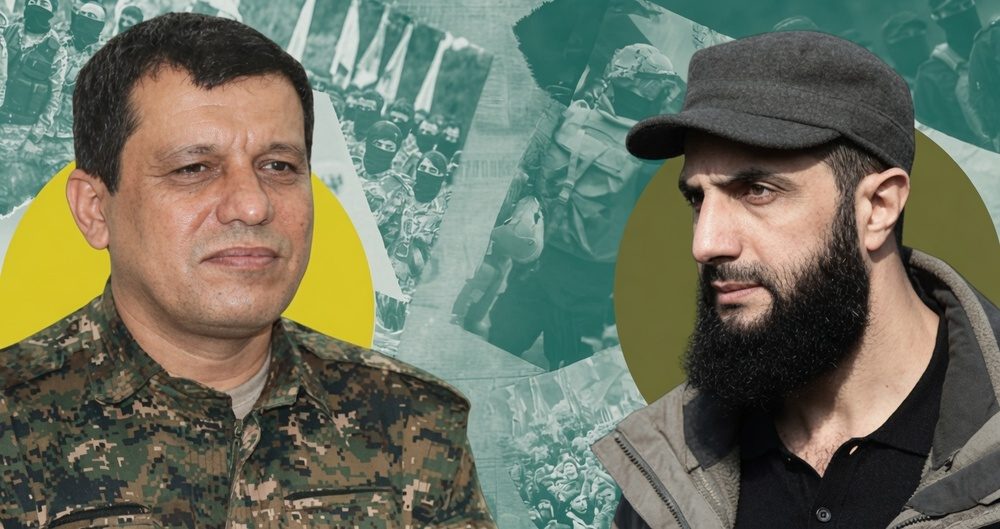
The real turning point began in 2025. According to Middle East Eye, signs of this change were evident from early 2025, as the United States, previously the main supporter of the SDF, gradually expanded its relations with the new government in Damascus. Washington pushed the SDF towards an agreement with Ahmed al-Sharaa, which was eventually signed on March 10, 2025, between Mazloum Abdi and the Syrian president.
The agreement in principle accepted the integration of the SDF into the structure of the Syrian government, but did not provide a clear commitment to the Kurds’ most important political demand, namely the creation of some kind of federal system or self-government similar to the Iraqi Kurdistan Region. As a result, the implementation of the agreement stalled or slowed down for months.
According to Middle East Eye, the SDF leadership at times hoped that the mistakes of the Ahmed al-Sharaa government, especially in the Druze areas of Sweida, would strengthen the Kurds’ position and make Washington hesitant to fully transfer the Kurdish areas to Damascus. But this calculation did not work. The US once again pushed for the implementation of the agreement, and eventually government forces, with the support of Turkey and with the tacit consent of Washington, entered areas controlled by the SDF. As a result, the forces lost a large part of their territorial gains in the Euphrates Valley and retreated to the predominantly Kurdish areas of the northeast.
According to Amarji, the Syrian Democratic Forces are to be integrated into the Syrian army in four brigades, each with about 1,300 troops, and another 1,700 are still awaiting official approval to join. Kurdish units are to be deployed along the border. Also, about 1,500 members of the Women's Defense Units are to be integrated, mainly into the internal security forces affiliated with the Ministry of Interior, and the possibility of some of them joining the Syrian army in later stages has also been raised.
Amarji also reports on the transfer of administrative and economic structures to the central government. The Syrian government has taken control of the northern oil fields and the resources of Hasakah province have also been placed under the government's control. In this framework, the revenues from these resources must be deposited in the central government treasury, and political and administrative decisions will be made solely by the Syrian government.
The future of Mazloum Abdi and Ilham Ahmed also shows that the Kurdish strategy has shifted from military control to participation in the political structure. Amarji reports that Mazloum Abdi has been appointed as the presidential advisor on Kurdish affairs or inter-communal relations, and Ilham Ahmed has been promoted to the position of deputy in the Syrian parliament. Ahmed is expected to play a role in the process of drafting the new constitution and the Kurdish file in the Foreign Relations Committee.
Syria has now entered a phase in which a single army, a single state, and a single administrative structure are taking shape. But the success of this project depends on whether the unity of the state is accompanied by acceptance of ethnic and cultural diversity. Syria’s historical experience under Assad has shown that imposed unity and a policy of identity denial itself contribute to the production of crisis.
From this perspective, the dissolution of the Syrian Democratic Forces should be seen as the end of “Kurdish rule,” not the end of the “Kurdish issue.” What ended on August 25, 2026, was an independent military and administrative structure that had been formed over more than a decade; but what has now begun is a political struggle to consolidate Kurdish rights in the Syrian constitution, education system, state institutions, and political structure.
As a result, the end of Kurdish rule in Syria cannot be measured solely by the size of the territory or the number of armed forces. The Kurds have retreated militarily and in control of the territory, but at the same time the issue of their identity, language, and political rights has become more important than ever in the Syrian political equation. The decisive phase has now begun: the extent to which Damascus will fulfill its commitments and the extent to which the Kurds will be able to translate the social and political power they have gained over the years into legal and sustainable rights will be determined in the future.
User comments